Refugee and Asylum Seeker Service Marks Refugee Week – Serina Aboim

The Guy’s and St Thomas’ NHS Foundation Trust’s Refugee and Asylum Seeker Service supports refugees, asylum seekers, and people with insecure immigration status by improving access to healthcare and helping to reduce health inequalities. Working closely with community partners, the service helps people navigate the NHS and connect with wider support services.
As part of this year’s Refugee Week celebrations, the GSTT Refugee and Asylum Seeker Service is proud to support community led events organised in partnership with local organisations which include:  Wellbeing Day and community sports activities to provide opportunities for people to connect, build friendships, break down barriers, and celebrate the strength and diversity of our local communities.
Serina Aboim is Deputy Head of Nursing, Health inclusion and continence service at the Guy’s and St Thomas’​ NHS Foundation Trust, and is a member of our core team/committee.
We are also proud to have in our team Tori Cooper who is Deputy Chief Nurse Quality Improvement and Vulnerable Patients, at University Hospitals Sussex NHS Foundation Trust and Trustee at GuildCare.
The HVHF has a long history of supporting equitable access to healthcare for asylum seekers and refugees as well as other disadvantaged and vulnerable groups. We strongly believe that all humans have the right to be treated with decency and dignity and abhor all forms of dehumanisation and demonisation of individuals and groups.
Paquita de Zulueta wrote for the BMJ on this topic in 2011.

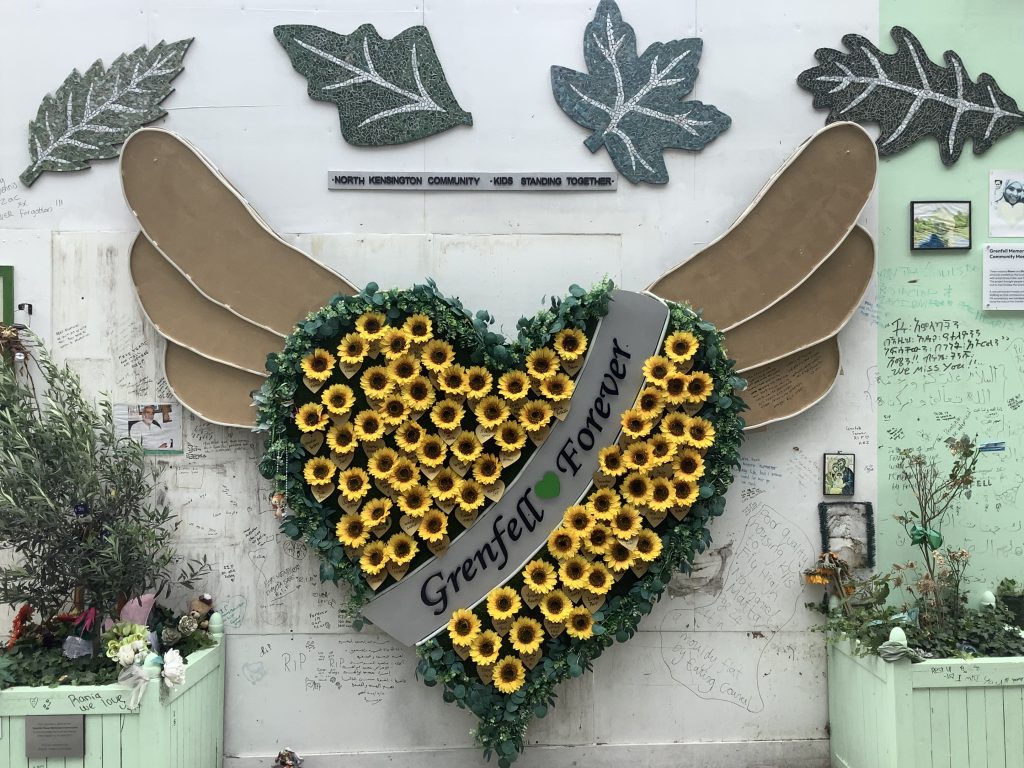
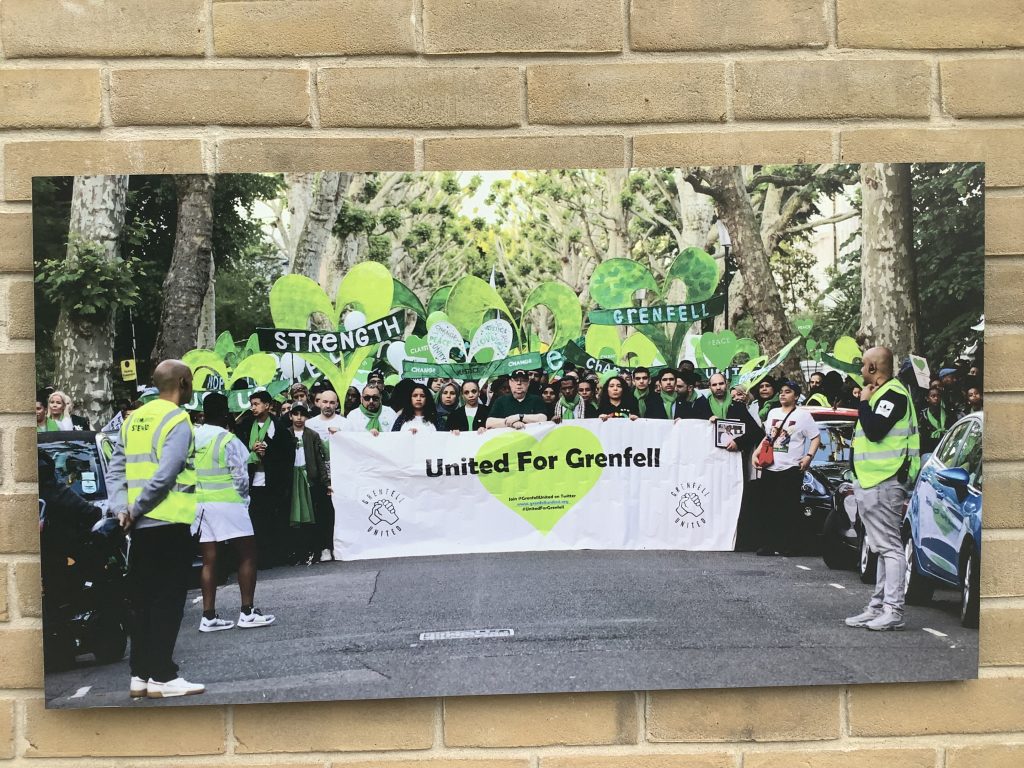
GRENFELL – Nine years on. Reflections – shortly after the fire and present day – from Paquita de Zulueta, local resident, volunteer and GP


Nine years ago Grenfell Tower burst into flames, taking the lives of 72 people. Every single death was preventable. We know that people who carried responsibility for the safety of the tower knew of the dangers, ignored them, or, worse still, hid them, yet not a single person has been charged or sentenced to prison. Still unsafe, inflammable cladding has not been removed from tall buildings all across the UK. The survivors and bereaved were physically and psychologically harmed, but also morally injured. They were grievously betrayed and deserve justice. A professor of criminology and sociology, Steven Tombs, called the tragedy social murder – the elimination of groups via atrocious events through calculated abandonment.

As a clinical volunteer and then GP lead for the NHS outreach team I learnt many things. I give lectures to medical students and healthcare professionals about disaster preparedness, the impact of trauma, individual and community resilience, psychological first aid, culturally sensitive (or insensitive) care, collective grief and the importance of rituals and memorialisation, as well as moral repair and restorative justice for the healing process.

But here I have decided to publish a piece I wrote a few months after the fire, in October 2017 , when the memory was still raw and before I began work for the NHS team. I believe it is still relevant. I am painfully aware of how much suffering this tragedy has caused and how the repercussions still run deep and will do so for a long time to come.  As I write, homes are being destroyed in Palestine, Lebanon, Ukraine, Iran, Sudan, the DRC and elsewhere, killing civilians – men, women, children, babies. Lives shattered, hopes destroyed. Many, many Grenfells. I ask myself is this endless, needless death and destruction where humanity wants to go?

Grenfell Tower – An ugly symbol of our time. A general practitioner’s account of the early days after the fire.

Sitting at the back of the lecture hall in the Liverpool Medical Institute, I switched on my iPad, when the news headlines flashed across the screen. This was followed by images of huge, obscene, red and orange tongues of fire licking the facade, billows of toxic smoke, haunted and harrowed faces of survivors, exhausted firemen collapsed on the ground. These were accompanied by a torrent of anguished stories of lost loved ones, of babies thrown from windows, of families forced apart as they struggled to leave the building, of people stumbling down the only staircase, blinded and choked by the acrid smoke. With a shock I realised the tower was only a few hundred yards from my own home, in a neighbourhood I know well from many years living there and working as a GP. No doubt some of the patients I had attended lived in Grenfell tower. I could not concentrate the rest of the day, and felt a mounting pressure to return, to be there, to offer succour and support.

I got back to London that evening and hurried home from the tube station past police cordons and volunteers. Mobiles wedged to their ears, brows furrowed, eyes darting frantically, they were carrying or standing by huge bags filled with clothes and bedding, packets of nappies, boxes of food, baskets of fruit. Normally quiet and discreet, the neighbourhood was humming with activity, throbbing with an urgent, raw altruism. I got home and tried to find out who was coordinating the community response, particularly for healthcare, but in frustration I had to give up. Instead I went to the local church. People were milling around in muted confusion amidst tables laden with food and drink. I identified the coordinator, a somewhat dishevelled middle-aged woman sitting on a chair with a jumbled pile of phones and chargers in front of her. She told me they were ‘overwhelmed’ with volunteers. She asked if I could talk to a lady who had ‘medical problems’, and pointed to a couple slumped on a sofa looking tired and resigned. They had not come from the tower but lived close by and had been forced out of their home. After sorting out the woman’s problems as best I could, I went back home and slept fitfully.

The next morning I found out that a relief hub had formed at the sports centre at Westway and I sped there on my bicycle, stethoscope in handbag, doctor’s badge flapping round my neck, past streams of people, walking in a daze, their expressions haunted, their eyes vacant. Ash flakes, like funereal confetti, slowly spiralled downwards. The acrid smell of burnt plastic clung to the air. I passed by a gap in the buildings and stopped. A small cluster had formed. They were staring silently eastwards, immobile, as if frozen. The media images cannot convey the monstrosity, the immensity of it. It looms huge, dark and forbidding, like a giant skull, with its multiple eye sockets glaring reproachfully at us. It overwhelms us, oppresses us. We cannot speak or barely breathe. This grotesque cadaver of brutal architecture stands upright among its tall, grey, sullen brethren, refusing to lie down, refusing to be ignored. In the silence we can still hear the screams and feel the horror. We can imagine the charred bodies lying abandoned, alone and bereft. Death stalks us.

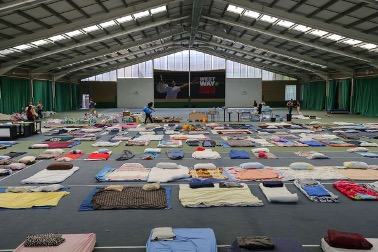
As I made my way to Westway, I passed under the A40 flyover and in this underpass there were pop-up kitchens, a makeshift bar, and even a band playing – the atmosphere was oddly festive. I managed to persuade the large burly policeman standing at the barrier that I was ‘authentic’, and he let me through. At the entrance, scores of volunteers were sorting piles of donations and tables were laden with food. Charity workers, religious leaders, and reporters hungry for stories were milling around. I sensed a desperate collective need to make things better, somehow, anyhow. A Red Cross volunteer escorted me to the huge sports hall, past piles of shoes of all kinds and sizes, tins and packets of food, orderly rows of toiletries and nappies, cheap suitcases and holdalls, and then to a desk marked ‘health’ where a couple of doctors were sitting somewhat awkwardly, looking apprehensive. Three harried women in blue high-viz jackets marked ‘RBK&C’ were at a desk alongside, trying to sort out accommodation for the survivors.  Rows and rows of makeshift beds filled the hall – reminding one of other disaster scenarios in distant lands. But for us, there were no screens or examination couch, no equipment even, and we awkwardly had to make do. “This is like Lesbos!” said Mo, a young doctor. After a couple of hours a cheerful plump-cheeked colleague came from the local urgent care centre bearing shining steel cases with medical equipment and boxes of medicines. We set up a WhatsApp group “The Grenfell Medics” and organised ourselves so that we could work in shifts and share information and advice. I finally felt part of a purposeful team composed mainly of younger colleagues. We waited expectantly for our patients to arrive.

Although there were not many people in the huge sports hall, the suffering was palpable. It hung over us like a heavy, doleful cloud. In one corner a child was playing badminton with his father. In another a large family group sat in a circle trying to console a woman who had lost her husband. The silence was broken by her sporadic wails. I saw the couple from the church the night before. They had spent the night there and were pleased to see me. The woman was going to the local hospital for her booked appointment with a specialist. I talked to Felicia (not her real name), a survivor. She had already seen a counsellor, but I was asked to see her as she had sustained a head injury and temporarily lost consciousness when coming down the stairs of the tower. When the fire broke out her partner had ordered her to flee, but he had gone upstairs to warn his sister and her family. He was not seen again (or the family). She said someone had helped her to get out of the building. She did not know whom. She was desperately hoping her partner was alive. Felicia had worrying symptoms that could mean she had a brain injury – headache, short-term memory loss, dizziness, even fluctuating levels of consciousness. These could all be caused by traumatic stress and lack of sleep, yet I still felt she needed to be checked out. But it transpired she was reluctant to go to casualty because, like some of the others my colleagues had encountered, she was an undocumented migrant. I gathered that she was terrified of being handed over to the Home Office and face deportation. In fact, I later found out, she had been told by her friends not to come to the centre. I reassured her as best I could and managed to persuade her to go, but we share her uneasiness. How many like her are not seeking the help they need? Will they be reported if they do? And how many lying in the tower now are not on an official register, their existence unacknowledged, their deaths doomed to be unmourned?

A young woman, another survivor of the fire, needed help carrying her things to the street where a friend was picking her up. She had made sure she had everything she needed – two full suitcases, a pillow and a bag of provisions. She had the glint of determination in her eyes, the face of the resilient survivor. I went with her and we hugged each other as she left. There was a lot of hugging that day and the ones that followed. Strict codes of conduct regarding ‘boundary maintenance’ were abandoned. We encountered each other as fellow human beings. We rejoiced in their survival.  As I left with the setting sun I saw rows of people sitting cross-legged singing and clapping. A long roll of cloth and plates were laid in front of them. Smiling volunteers were carrying large bowls of food, and baskets of bread as they prepared to break the fast and enjoy Iftar. It was poignantly joyful. I went back the following afternoon. As I biked past, the cluster looking at the tower had become a crowd, and many of the faces were sullen, angry. There were now several posters of the missing – their smiling faces reproaching us, moving us to tears.

I returned to Westway the following week and the impression was of greater order and organisation. There were several stalls with large printed signs – “health”, “mental health”, “passports”, “utilities” & so on. The makeshift beds had all but disappeared, and we had screens, an examination couch, computers, printers, and protocols. There were team meetings, evolving strategies and formal rotas. More people were streaming in seeking our medical services. They had difficulty seeing their own GP and needed their medication for chronic conditions such as asthma, diabetes, and hypertension. By now many are desperate for sleep. As neighbours or survivors they had witnessed the horror, helplessly watching the flames engulf the flats within which their friends and relatives were trapped, forced to listen to their piteous calls for help.

“I cannot sleep. When I close my eyes, I hear the screams, I see the flames”, says a young mother. She is tired, her hands shake, she has panic attacks. Her close friend is in hospital in a coma and she worries about her. She is in a hotel far from her home. A woman who escaped civil war in another country complains of blocked painful ears, but this does not prevent her from hearing the screams. This is the terrible irony: some of those in the tower had come to this country for refuge. Forced to leave their war-torn countries and endure unimaginable hardship and loss, they thought they had found a place of safety where they could rebuild their lives. But now they have lost everything all over again. In a few hours, hundreds of refugees have been created as a result of callous and possibly criminal neglect. We call them ‘victims’ – perhaps this makes us feel safer, more detached. But they are much more. They are our fellow citizens. Many are heroes, warriors even. I have been deeply humbled by their courage and quiet dignity, and by the generosity of their fellow residents. They need our compassion, our solidarity, our practical support, and some need our professional services, but they do not need or want our pity. They deserve justice and redress. They have been grievously betrayed. It is time to make amends.

As we excavate the charred residues of this disaster, we discover a litany of ignored warnings; of accounts of council money stashed away or used to ‘bribe’ richer residents; of stories from poorer residents that they were forced out of their homes during refurbishment works and not allowed back into the borough; of ‘social cleansing’; of governmental inertia and indifference. The seedy, sinister secrets emerge daily, like unwelcome vermin. Lifting the shiny facade, the rot is revealed. Gimlet-eyed bureaucrats, using a cold utilitarian calculus, decided that saving costs on materials and fire protection was worth the risk to human lives. And thus we witness the collateral damage of a fragmented, dehumanising system, where the chain of accountability is conveniently lost, where power and profit are ruthless accomplices and the poor and marginalised are treated as chattel. But the tower, in its inescapable concreteness, its sombre presence, does not just represent a giant tombstone for the lives that were lost, but also, perhaps, a symbol for change, of hope even, for those whose voices were unheeded for far too long.

Paquita de Zulueta 

Hope in the Collaborative Work of Artist, Doctor and Patient: Reflections on Practice.

Introduction

There is a line spoken by an ENT consultant that has stayed with me for many years: “Without your medical file you don’t exist within this environment.” The comment was casual, but it resonated with something I had long sensed — that within the medical setting, the individual can often be reduced to a case, a file, a set of notes. The person, with all their complexity, vulnerability, and lived experience, risks becoming invisible.
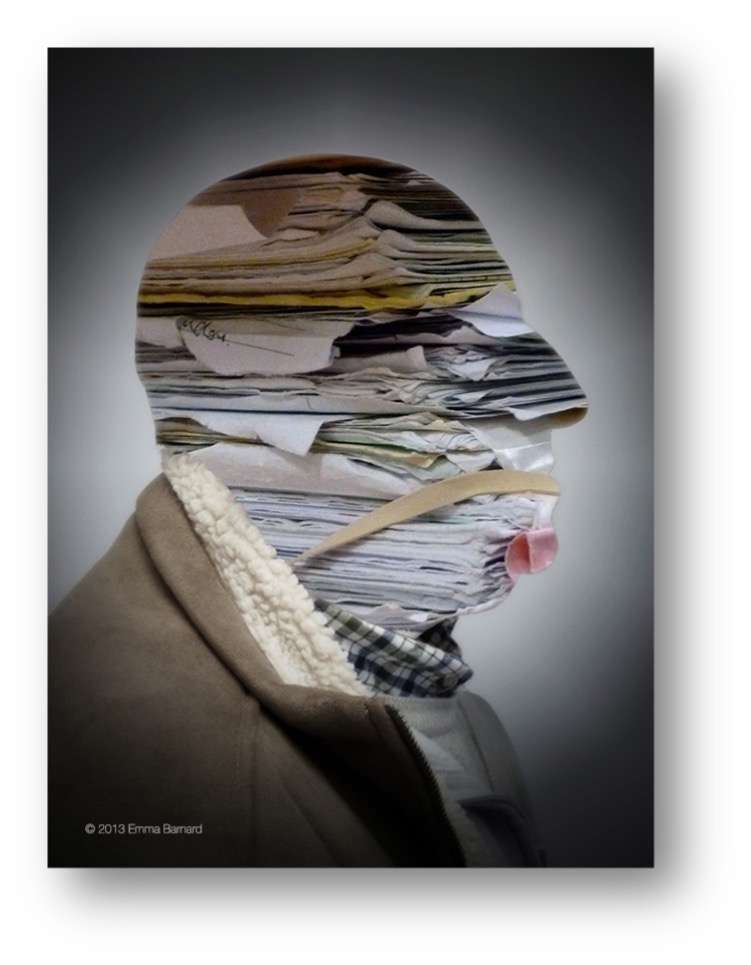
My practice as an artist for the past fifteen years has been a sustained attempt to challenge and reframe this reduction. Working collaboratively with doctors, surgeons, and patients, I aim to give voice, image, and presence to those who feel unseen in the clinical encounter. In doing so, I am also exploring how art can sustain hope: hope for patients facing illness, hope for doctors navigating immense pressures, and hope for the healthcare system as it seeks to remain humane.

This essay reflects on that practice. It will explore the medical context and the notion of the medical gaze as theorised by Michel Foucault; introduce key projects such as Patient as Paper and Primum Non Nocere; and consider how collaboration between artist, doctor, and patient creates new spaces for dialogue. Ultimately, I argue that art has a unique capacity to restore hope in healthcare, precisely because it insists on recognising the humanity behind the file.

Context: Medicine, Art, and the Medical Gaze

Modern medicine is extraordinary in its technical capacity. It diagnoses, treats, and heals with a precision that would have been unimaginable only a century ago. And yet, the very systems that make this possible often sideline the patient’s own voice.

Michel Foucault, in The Birth of the Clinic (1973), described how the rise of modern medicine brought with it a new way of seeing: the medical gaze. He wrote:

The patient is reduced to the passive role of the object of knowledge; the medical gaze penetrates beneath the surface of the body to read its hidden truths.”

And further: “The gaze that sees is a gaze that dominates.”


This concept captures what many patients continue to experience: the feeling of being studied, scrutinised, and categorised, rather than truly listened to. Their subjectivity is effaced; they become cases rather than persons. My own encounters with patients confirm this. One woman who had undergone a laryngectomy told me, heartbreakingly:

“I felt as if my personality had been taken away from me because I could not express myself anymore.” 

Her words exemplify the double silencing that can occur: the literal loss of voice after surgery, and the figurative silencing within the medical system.

It is in this context that I approach my practice. I am not a clinician, but an artist. My role is not to diagnose, but to listen and to create. Through visual and participatory work, I aim to opena space where patients can articulate what is otherwise unheard, and where doctors can reconnect with the humanity of their patients.

Hope in Healthcare

Before turning to specific projects, it is worth reflecting briefly on the concept of hope itself.

Hope is not the same as optimism. For many patients, particularly those with chronic or life-limiting conditions, hope is not about cure. Rather, it is about resilience, meaning, and dignity in the face of uncertainty. For doctors, hope involves a delicate balance: sustaining possibility without offering false promises. And for artists like myself, hope is often about creating a visual language that allows patients to speak in ways beyond words.

In all these senses, hope is relational. It exists not as an abstract idea, but in the spaces between people — in the dialogue between doctor and patient, in the collaborative act of making art, in the simple acknowledgement that a person’s story matters.

Patient as Paper: Offering a Voice through Image

The project for which I am perhaps best known is Patient as Paper, developed with ENT (Head and Neck) surgeon Mike Papesch FRACS. After discussion about their experience, patients are free to inscribe, annotate, draw, or mark over their portraits.

The results are extraordinary. Some patients draw areas of pain in bold, vivid colour, some leave sections blank, using absence as a form of presence. Each silhouette becomes a portrait not of anatomy, but of lived experience.

Patients frequently tell me that the process helps them feel “seen” in a way that medical consultations do not. As one participant explained, marking the paper gave them a sense of authorship over their illness story. They became active narrators rather than passive subjects.

For clinicians, too, the works are often revelatory. Surgeons have told me: “I never realised this is what my patient was carrying.” Seeing the patient’s experience externalised on paperreframes the relationship. The file becomes more than data; the patient becomes a person again.

In this way, Patient as Paper generates hope not only for patients but also for doctors. For patients, it affirms their voice. For doctors, it offers a reminder of the humanity at the heart of medicine — a vital counter to burnout and compassion fatigue. 

Primum Non Nocere: The Fragility of Hope in Surgery
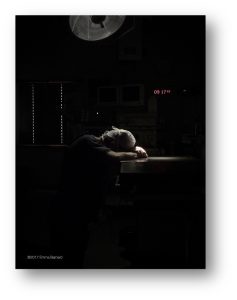
Another strand of my work is the series Primum Non Nocere — Latin for “First, do no harm.” Here I turned my attention to the world of the surgical theatre.

In this series, I sought to visualise the tension inherent in surgery: the immense trust placed in the surgeon, the weight of responsibility carried, and the fine line between healing and harm. Images are often shadowy, ambiguous, suggesting both the precision and the risk of surgical practice.

Hope here is fragile, yet it is palpable. It lies in the trust that patients place in their surgeons, and in the surgeons’ own commitment to care despite the pressures they face. By creating artworks that dwell in this tension, I aim to honour both perspectives — patient and doctor — and to open a dialogue about the ethical and emotional dimensions of surgical practice.

Triangular Dialogue: Artist, Doctor, Patient

Across these projects, a theme emerges: the creation of a triangular dialogue between artist, doctor, and patient.

  • The artist acts as mediator, witness, and translator, holding the patient’s story in visual form.
  • The doctor provides medical truth, but also carries the responsibility of sustaining hope.
  • The patient brings vulnerability, but also creativity and agency.

When these three roles intersect, something powerful happens. Patients feel less isolated, doctors reconnect with empathy, and art provides a space where difficult emotions can be expressed without judgment.

Of course, such work is not without challenges. Ethical considerations are paramount: ensuring consent, avoiding exploitation, respecting the patient’s own interpretation of their art. Yet when done carefully, the triangular dialogue creates precisely the conditions in which hope can flourish.

Reflections from Patients and Clinicians

The most powerful evidence of this comes not from me, but from those who have participated. Patients have described feeling “lighter” after externalising their experiences onto paper. One said: “It feels like I’ve finally been listened to.”

Clinicians, too, reflect on the impact. One surgeon admitted that seeing a patient’s artwork changed the way he approached consultations. Another commented on how art helped to “re-humanise” the medical encounter.

These reflections suggest that hope is not something abstract or distant. It is generated in very practical ways — through listening, witnessing, and creating spaces where stories can be told.

This drawing, created by a doctor in a busy ENT outpatient clinic, shows a generic profile, on one side there are tick marks that symbolise completed tasks and visible progress. Inside the profile, however, is another expression—one of sadness—encircled by question marks. It reflects the doctor’s realisation that although care may appear complete from a clinical standpoint, they often carry unseen uncertainty and worry beneath the surface.

Audience Reflection: Where Do You See Hope?

In presenting this work, I often invite audiences to pause and reflect. Where have you seen hope — fragile or strong — in healthcare, art, or in your own life?

The responses are varied: a nurse recalling a patient’s gratitude; a patient remembering a doctor’s kind word; an artist describing the act of making as a lifeline. These reflections remind me that hope is not rare or inaccessible. It is present, though often hidden, waiting to be recognised.

Conclusion: Cultivating Spaces for Hope

To conclude, I return to the beginning: the idea that without a file, a patient does not exist. My work argues precisely the opposite: that the person exists fully, richly, beyond the file, and that art can help reveal this truth.

Hope in healthcare is not naïve optimism. It is the courage to face uncertainty, the dignity of being seen, the compassion of listening. It is relational, emerging in the spaces between people.

Through projects like Patient as Paper, Dry Mouth Dialogue: an artistic enquiry into xerostomia and Margin: where clinical boundaries meet lived experience, I have witnessed how art can restore hope by re-humanising the medical encounter. By creating a triangular dialogue between artist, doctor, and patient, we can move beyond reductionist files and diagnoses, and towards a more holistic vision of care.

I leave you with a question:

How might you cultivate spaces for hope — however small — in your own work, your practice, or your life?

Emma Barnard. MA (RCA). HVHF Artist in Residence. 


For more information about my work and to sign up to my newsletter:

https://www.emmabarnard.com

https://www.instagram.com/emmabarnardartwork/


References

Fancourt, D., & Finn, S. (2019). What is the evidence on the role of the arts in improving health and well-being? Health Evidence Network synthesis report, No. 67. WHO Regional Office for Europe. ISBN-13: 978-92-890-5455-3. NCBI

Foucault, M. (1963). Naissance de la clinique : une archéologie du regard médical. Presses Universitaires de France.
Foucault, M. (1973). The Birth of the Clinic: An Archaeology of Medical Perception (A. M. Sheridan, Trans.). Tavistock Publications. (Original work published 1963) Wikipedia+2Cambridge University Press & Assessment+2

Hinsliff-Smith, K., McGarry, J., & Ali, P. (Eds.). (2022). Arts Based Health Care Research: A Multidisciplinary Perspective. Springer. SpringerLink

Daykin, N. (2021). Arts, Health and Well-Being: A Critical Perspective on Research, Policy and Practice. Routledge. Taylor & Francis

Boyce, M., Bungay, H., Munn-Giddings, C., & Wilson, C. (2018). The impact of the arts in healthcare on patients and service users: A critical review. Health & Social Care in the Community, 26(4), 458-473. https://doi.org/10.1111/hsc.12502 Wiley Online Library

Kaptein, A. A., Hughes, B. M., Murray, M., & Smyth, J. M. (2018). Start making sense: Art informing health psychology. Health Psychology Open, 5(1). SAGE Journals
 

Why we need to talk about Dying


Last spring, I was invited to give a talk by the British Geriatric Society, about the values that are important to people at the end of their lives when facing a terminal diagnosis. I tried to orientate it, using community as a lens, so that we could see death and dying in the context beyond that of the medical profession. In the talk, I referenced Kellehear, who writes and talks about the 95% rule[i]. The National Health Service and the medical profession actually provide such a small amount of care to the dying person – only around 5%, a tiny part of their reality. The other 95% of time they are looked afterby their families, their friends, carers and the volunteers who have worked to develop experience and knowledge. Yet this so often plays second fiddle to medical knowledge. Such work needs recognition, respect and support. Sadly, in researching my talk, I learned how our approach to the complexity and uncertainty of old age and frailty is fragmented and siloed, much like the support for people requiring palliative care. Palliative care is so often mistakenly thought to be synonymous with end of life care, but it isn’t. Increasingly there is evidence that it needs to be mobilised at the same time as the diagnosis of a life-limiting condition, whether it be cancer-related or due to chronic multi morbidity.

Structuring my talk, and looking at the evidence on what matters most to people at the end of life, three themes emerged: the need to de-medicalise dying and death and reinstate its place as a natural part of daily life; to diagnose dying and to communicate the process with the patient and their family; and finally to demonstrate how asking what matters most to patients makes it possible to tailor future care to their needs. If we can achieve these things, we can bring the patient into the centre of their care at this crucial stage in their lives and deliver support that fits with what matters to them.

By addressing these three themes it becomes possible to deconstruct the biomedical model of care. Taking dying and death out of the solely medical domain, becoming joint partners in caring for the dying patient in the broadest sense, facilitates holistic, personalised care and creates the opportunity for a more relational and compassionate interaction.

As I was preparing for the lecture, my brother-in-law was diagnosed with advanced metastatic cancer of unknown primary and was told by his oncologist that, in his weakened state, the chemotherapy would kill him. However, his mood changed and lifted in response to the consultation. When asked what it was about that consultation that had made such a difference to his demeanour, despite such a poor prognosis, he said it was the certainty of the outcome – no more was he to be the subject of distant multi-disciplinary team (MDT) meetings. He was listened to, his conversations with the oncologist were honest and open, and a trusting relationship developed. His care became proactive, and the palliative care team was mobilised and subsequently wrapped around him. It was a source of great comfort to him and his family.

With knowledge and information about dying comes empowerment. Death education can lead to prevention, reduce avoidable admission, reduce harm, allows early intervention and can assist re-orientation of the health services. Kellehear talks about promoting positive solutions. Normalising death can reduce the sense of isolation that comes with advanced illness and dying. A “new you”, someone living with loss and a life-limiting illness, allows others to look after you. Education around dying and death, teaching people that these things are neither unusual nor fearful, can help reintegrate them into everyday life, where they belong. In “When Breath Becomes Air,” Paul Kalinithi[ii] describes how, when discovering further treatment was futile, he had to redefine himself. He had to discover a way of letting go of the notion of fulfilling his lifelong ambition to be a neurosurgeon. Facing death as a young man, he realised that in accepting his fate, he was able to recognise that he still had life to live. Albeit with different ambitions – but he was very much still living.

Katherine Mannix[iii], a palliative care consultant and author of With The End in Mind, recounts stories of patients whose lives – and quality of life – had been enhanced by the knowledge and understanding of the course of their illness and of the dying process. She writes movingly about the relief that accompanies explanations about dying. Fear is dispelled, peace can ensue and people are able to treasure the time they have left. They appreciate small acts of kindness as they live with the reality of the fragility of life. Nothing is taken for granted.

Recent literature reviews[iv] have distilled what is most important to people at the end of their lives.

These are:

  1. Time to spend with family and friends, to make amends and to say what needs to be said
  2. Effective communication and shared decision making (relevant around choice of investigations and treatment)
  3. Respectful and compassionate care
  4. Trust and confidence in clinicians
  5. Avoidance of unnecessary intervention

Knowledge, honesty, integrity and openness are all important to patients, who value time with their families and friends, time to talk and time to prepare for death, whilst maintaining a quality of life until they die.

Why does diagnosing dying have to be so difficult? Paying attention to the course of a person’s history, the relapses and remissions, really hearing the narrative of their illness journey, is often more difficult to track with the fragmentation of care. In-hours and out-of-hours care, and siloed specialty services in hospitals, are more often geared for diagnosis and cure, rather than person centred, and holistic care. Reviewing such narratives and asking patients what matters most at this stage in their illness – after a recent admission, or intervention – and finding out what is most important for them can bring revealing and surprising answers. People may play down symptoms and their feelings about their demise to healthcare professionals, for fear that the doctor may give up on them. They are more likely to open up to auxiliary staff in hospital, or medical students. Maybe doctors, strapped for time, prefer to avoid the discomfort of discussing the unknown course of the illness and find it easier, as they have been trained to do, to come up with further intervention, a trial of treatment to avoid the disquiet of not knowing. Just because we can do things, it doesn’t mean that we should.

You may ask “Does it matter?” Of course it does! Because having a diagnosis of “dying” can shape access to support and facilitate the provision of good care. It can enable planning, allowing patients to anticipate care requirements. Prioritising can start. Doors to better care and help begin to open. An EOL diagnosis can lead to those patients being prioritised, which, unless incorporated into best practice, might disadvantage others in similar, as yet undiagnosed, predicaments.

Referring to the values that matter most when dying – trust, honesty, good access to care, and time to prepare for death – underlines just why it really does matter.

Dr Frances da Cunha. Retired GP and Trustee Human Values in Healthcare Forum

References:

[i] Allan Kellehear: The social nature of dying and the social nature of health. In Oxford textbook of public health palliative care, 2022. https://doi.org/10.1093/med/9780198862994.003.0004 (Abstract)

[ii] Paul Kalinithi. When Breath becomes Air

[iii] Kathryn Mannix. With the End in Mind

[iv] Virdun, Luckett, Davidson, Phillips. Dying in the hospital setting: A systematic review of quantitative studies identifying the elements of end of life care that patients and their families rank as being important. Journal of palliative Medicine 2015 https://journals.sagepub.com/doi/10.1177/0269216315583032

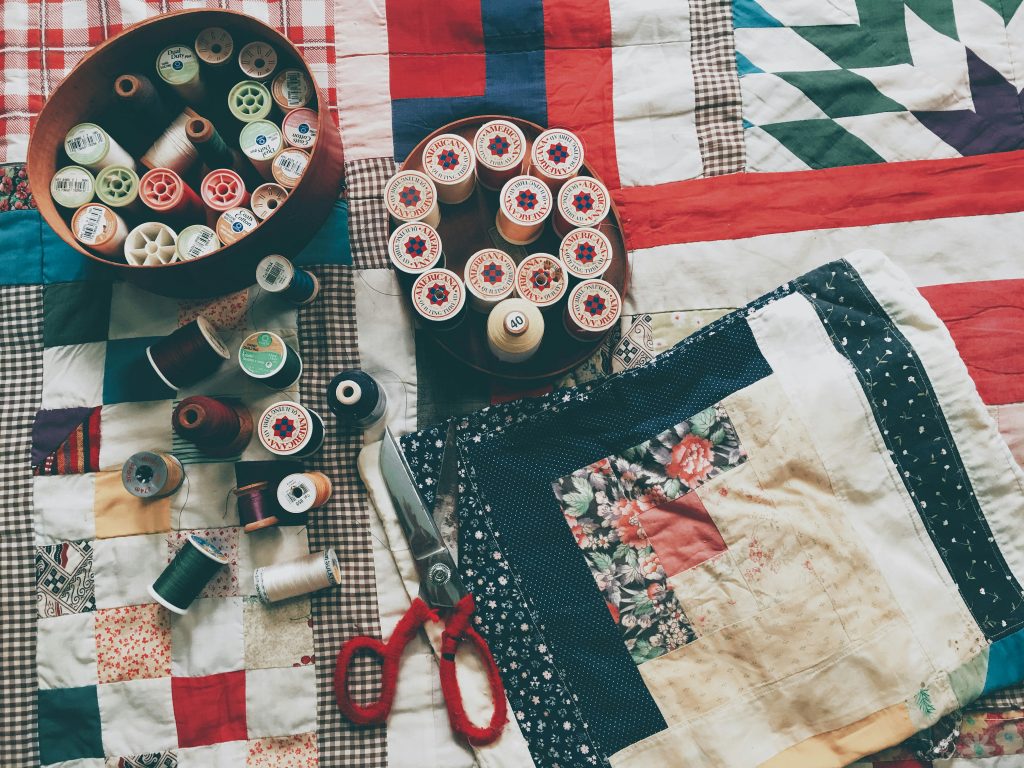
[Photo by Ýlona María Rybka on Unsplash]

Woven Between Us: the Fabric of Care by Dr Jane Myat

Jane Myat, our new valued member of the HVHF core team, writes about the healing art and practice of repair and the reparative work she is involved in now and in the future. 

Paquita and I first met through the Northeast London Deep End Group, and have since bonded over cups of tea and wide-ranging conversations about compassion, complexity and what truly matters in healthcare. So when she invited me to speak at the upcoming Replenishing event for the Human Values in Healthcare Forum this September, I felt both honoured and at home.

She suggested the title: Creating a Community of Practice with an Interstitium of Care and Listening Spaces. The phrase immediately resonated. I didn’t think of frameworks or organisational charts. I thought of lace.

Fine and intricate, lace is formed of space as much as substance – a network of fibres stretched and looped over time. It’s the in-between that gives it strength. It reminds me of the linens I used to rummage through as a child in Auntie Billie’s dining room. I didn’t know then what I was seeking – only that I was drawn to treasure-hunting. Folded in those drawers were embroidered napkins, lace doilies, old tablecloths worn soft and stained with use. Traces of lives, of hands, of time gone by. I think I wanted to feel safe and to belong.

Auntie Billie was part of the Ladies Linen League during the war. She taught me to knit when I was barely three. Sitting beside her on the scratchy blue settee in Birmingham, I learned the beat and rhythm of sharp and rigid needles working with the soft yarn. Push it in, wrap it round, pull it through, slip it off. We’d chant the words like a spell or a prayer. A tiny scarf grew, full of holes, row by row, under my fat little fingers, destined for a teddy or a doll. When I turned nine or ten, Auntie Billie sent me a tiny basket lined with hand-sewn pink lawn. A treasure box. It held a miniature sewing kit, lovingly made and gathered: thimble, pincushion, needle case. Each piece told me I was capable of making things and of mending things.

This memory feels more than nostalgic – it’s a thread still running through me. There’s something about stitching, darning, repairing – practices that take time and attention, that work with the tear rather than hiding it or discarding the whole. We embrace the damage, surround it with small stitches, wrap it in fibre, carefully hold the tension, weave the sharp needle in and out, and create a new pattern. The original wound remains – but once tended to, it becomes part of something beautiful. This is the kind of process that feels essential now – in healthcare, humancare, earthcare.

But to repair, we must still use sharp tools. The needle, the blade, the tongue. They can pierce, cut, tear — or they can shape, bind, create. I think of my teenage years, immersed in making clothes, when my father asked me to sew him a pair of jeans. The raw denim was stiff and unforgiving. The pins hurt my fingers. Needles snapped. It was hard, physical work. And yet when the garment came together and softened with time and wear, it started to hold his shape, his life. Real cloth carrying memory. There is beauty in the hand-worked, lived-in fabric so different from the factory-ripped denim made to look worn before it’s even touched a body.

This is the paradox we live with: our tools can harm or heal. Fire can destroy or cook a shared meal. Knives can stab or carve a spoon. Words can wound or open a difficult but generative conversation. We have a responsibility to learn how to use our tools with care. To know when to soften, and when to be precise. To craft with both tenderness and intention.

Sage Practices along with other projects I’m involved in, The Cards, The River of Hope and Circle of Soup – are all part of a quiet weaving. I am beginning to patch together a life from the fragments and foragings gathered on my journey so far, after stepping off the treadmill of conventional general practice. Weaving it all together will take time. It doesn’t look neat – not yet. There are layers and textures to consider. I’ve been going slowly, deliberately, trying not to drag the familiar warp-speed urgency of the system I left behind into this new, hand-crafted fabric.

If Sage Practices were a part of the human body, I once wondered, what would it be? A podcast episode with Sister Simone Campbell – How to Be Spiritually Bold – stirred this question. When contemplating the Body of Christ, she said, she imagined herself as gastric acid. She laughed: Just enough. In the right place. At the right time. Not too much! It was a moment of humour that stayed with me – and a deeply resonant metaphor. Who are we, and what is our role in the wider body of our communities?

The interstitium – once thought to be empty – is now understood as a vital space: a fine, fluid, lace-like network that holds and supports life. Invisible, yet essential. It reminds me of the space between us in human relationship – the unseen, often unacknowledged tissue of care. That is the image behind the work we’re doing with Sage Practices: surrounding, cushioning, supporting, connecting.

How do we honour what we can’t see?

That subtle charge in a room when something’s gone wrong. The way a word, a joke, a misstep can tear at the delicate membrane of connection. The sudden heaviness of the atmosphere like a humid day before a storm. We know it. We feel it. Even when we don’t speak it.

I write this from a place of sadness. A moment of rupture. A misjudged joke. A tender mood. An old pattern. A row in a cherished relationship – made more painful because we’d been doing so well. I was tired, unarmoured, already thinned out by too much stimulation, too many conversations, too little sleep. We didn’t meet the moment well – our energies out of sync – and now, here we are again, trying to repair the fabric between us.

I glance at today’s newsfeed. The ripple widens. Hurt is being hurled across borders and screens, exploding all around. The world feels full of rupture.

It’s hard to be human. We are such devastating creatures – capable of tenderness and terror, of care and cruelty. In our own homes and across nations, in our inner lives and on the planetary stage, we mirror the same fraying. The fabric that might hold us together wearing thin. We’ve lost many of our anchors, the knots that hold us steady, our patterns. The garment of our shared life feels tangled, threadbare, some fibres gone entirely.

And yet – I still believe in the beauty of repair.

There’s an Icelandic word – nægtni – that speaks of near-carefulness. A way of being where we pay attention and are respectful, especially when we come close to others. How do we learn to be in murmuration, in flock or in shoal? This is what The Cards were made for: to help us notice where we are, and how to meet well at the borders between us. With dignity. With honesty. With grace. I don’t really know how to pronounce nægtni – but to me, it sounds like a powerful, insistent whisper.

As I think of fraying borders and unravelling seams, the story I return to – over and over – is of the old woman in the cave. She weaves a great cape of knowledge and care. And when the black dog of despair comes and pulls it all apart, she sighs. She bends down. She gathers the threads from the floor. And she begins again.

She does not try to make it perfect. The mistakes, the ruptures – they become part of the pattern. Because of them, not in spite of them, the fabric is beautiful.

This is the quiet work we are all invited into: to weave spaces of listening, to create containers with care and practice. To do, undo, and do again. In a world chasing precision medicine and artificial intelligence, we must not forget the handmade, the human. The mess and the muddle. The tenderness of repair.

It’s said that when embroidering, the reverse side should be as beautiful as the front. But we live in a time that privileges the surface – that hides what lies beneath. What if we made things more multi-dimensional? What if we lifted ourselves off our flat screens and into full form – shadow and all?

Jung warned that the shadow, when unacknowledged, becomes darker, denser, more dangerous. And make no mistake – these are dangerous times. We need to turn, like a needle in cloth – down and in, over and through. To look at what lies beneath – not to be lost there, but to find our way back. To reweave our roots, to anchor ourselves in our values, to mend the fabric of our connections one stitch at a time.

We need to learn to live with the tension, not erase it. To honour both the front and back of the tapestry – the visible design and the hidden knots that hold everything together.

And in that process, we make our container. Our drawer of lace. A cloth that can hold us from cradle to grave – delicate, flexible, resilient. Made not only of substance, but of the space between. Woven with care, an interstitium of relationship held in trust.

This work will take many hands and many hearts – through Sage Practices, the Human Values in Healthcare Forum, through our gatherings, our listening, our offerings – small acts of creation in a world at the edge of great unravelling. And yet, we are still weaving. Still tending the threads. Still believing in the possibility of something beautiful, handmade and whole.

And I think again of Auntie Billie’s basket – the gift that has never stopped giving. A woven container, made for a child, holding the means to repair. It’s long gone now, at least in its material form. But I can still feel it in my hands. And I hand it to you.

Even in writing this piece, a thread in my life loosened – a moment of misattunement – clumsy timing, hurt not intended but still felt. And so this too becomes part of the fabric. A reminder that the mending never stops. That we are always learning how to meet each other better – in vulnerability, in listening, in the shared work of repair.

This is our quiet revolution.

Making and mending.
Repairing and Regenerating.
Over and over
Amen


Postscript by Paquita de Zulueta 

“Homo Reparans” in our times. Repair as intrinsic to our humanity. 

In an illuminating slim book entitled Repair, the impulse to restore in a fragile world, the philosopher Elizabeth Spelman describes human beings as repairing animals. Homo Sapiens is also Homo Reparans. Repair, she observes, is something we engage in everyday and in almost all dimensions of our lives. “To repair is to acknowledge and to respond to the fracturability of the world we live in in a particular way “. We value what we repair. We use our minds, hands and heart in repair work. Repair is a craft. It requires patience, diligence, delicacy, and yes, creativity. “Repair is the creative destruction of brokenness”. We repair inanimate things (and this can be greatly satisfying), but our bodies and souls are also subject to fracture and fissure. For those, we seek healing and consolation from friends and family, or experts such as doctors, therapists and spiritual guides. We also repair relationships and communities, we talk of ‘patching things up’ and of reweaving or mending the social fabric.

Our capacity for repair, unlike creativity or destruction (the other two impulses) – does not excite much attention. It does not fit our capitalist consumer economy and throw-away culture –  our thirst for novelty, for shiny new things, for ‘progress’. “Move fast and break things” – the mantra coined by Mark Zuckerberg – glorifies speed, innovation and destruction of the old.  In contrast, repair is about trying to maintain some continuity with the past, to halt decay. It is slow, careful work. It is also a reminder that we are imperfect creatures in an imperfect world. It requires us to shed our hubris and arrogance and to be humble and honest about ourselves, to fully recognise both our capacity to harm and destroy, and our shared vulnerability, our finitude.

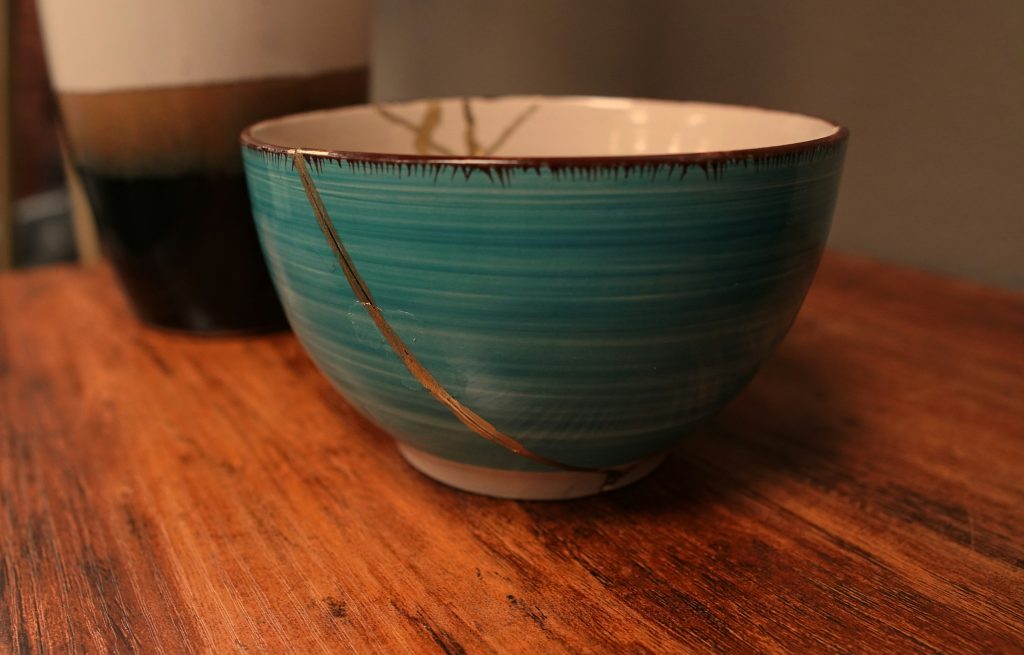
Nature is remarkable in its ability to self-heal and the same can be said of our bodies and minds. The role of the healer is to catalyse and foster the self-healing process, to help bring about repair, and even growth and flourishing. The Japanese art of Kintsugi (golden joinery) embraces the idea that objects, like people, are more beautiful and unique for having been broken and repaired. It forms part of the tradition of wabi-sabi that recognises transience and imperfection and can give us solace and inspiration. 

Much of the work of the Forum is connecting and working with others who share our aims and values, to repair the cracks and help create a humane, compassionate and sustainable system of care, by forming a mycelium that nourishes the roots for flourishing and growth.


COVID-19 Remembrance day – A blog from Tori Cooper

This blog is from Tori Cooper, a member of the HVHF core team and Director of Nursing · University Hospitals Sussex NHS Foundation Trust. She reminds us how the Pandemic affected us all, and how we are still feeling its effects. We must not forget those dark days and pretend that nothing happened, but honour those who sacrificed so much for others.

Today, Sunday 9th March is COVID-19 Day of Reflection, an opportunity to remember those who lost their lives, the acts of kindness from our local communities and my colleagues.

For me this day is personal. I am easily transported back to March 2020, to my team, the patients, my friends and my family, the commute and the fear. 

It was tense and uncertain with services at work disrupted and staff displaced, families worried and a lot of fear amongst colleagues but also a lot of courage. I was working in a busy London ED within a multi-cultural population and staff group. A team I will always be grateful for.

The conversations I had with my family are etched into me. I sorted out my personal paperwork, I had an honest conversation with my husband about the fear of the unknown, I offered to move out to protect him and my daughter, this was met with a hard ‘no’. I remained brave with my daughter as she cried and couldn’t sleep in case mummy died at work. Holding that fear I also had for myself or worse for them. I felt a risk to everyone, my family, friends and community.

But what of my team? I walked with them every day. We were brave together, fearful together and we looked after each other, holistically. We created spaces for support to share our fears and reflections and plans for ‘when this is over’. We focussed on what it was to be human, what was important to us at work, at home and for our lives. We adapted our physical workspaces and used a holistic approach to understand our new world.

The borders across Europe were closing, an Italian staff member found me mid-shift, he wanted to get back to Italy to be with his father, who was ok at this time and covid free, but had a long-term health condition and high risk, he wanted to be home with him. The news was detailing that Italy was closing its borders soon, but he could get a flight later that day. What should I do? I supported him, told him to go and to post me his ID badge when he could. He left and made it home just before the border closed. I remember his face, our conversation, the anguish and moral distress within him wanting to work and stay with his team but also needing to get home. He didn’t want to let anyone down. I told him it was my job to resolve the staffing and HR issues and his job to get the flight.

There are a million interactions and many different people with stories and memories to share. Some are too difficult to say out loud or even to think about. However, today is our chance to remember and I do.

My message to all of my NHS colleagues, thank you. My team that I worked with, you will always have a place in my heart, and I am so grateful for each of you. Team ED, you know who you are, thank you, thank you, thank you.

V Cooper

9 March 2025


The Memorial Wall along the Thames London

Gratitude as a Human Value in Healthcare by Giskin Day

Gratitude as a human value in healthcare

By Giskin Day PhD. HVHF adviser.

The inclusion of the requirement to treat patients with kindness in the GMC’s 2024 guidance on standards of good medical practice for doctors provoked fierce debate about whether feelings, like kindness, empathy and compassion, could or should be professional requirements. Critics argue that emotions are private and often instinctive, and that their ‘professionalisation’ is an unwarranted intrusion into individual’s psychological life. A more subtle argument, however, such as the one advanced by GP Ben Hoban, is that kindness is a fundamental human value that needs to be encouraged to flourish in a system that supports kinship, rather than being made an obligation.

What place, if any, do feelings and emotions have as values in healthcare? For the past few years, I have been trying to address that question in relation to the emotion of gratitude. I’ve looked at circumstances in which gratitude enhances or detracts from clinical encounters. I’ve studied hundreds of examples of gratitude in consultations in an effort to understand what makes gratitude valuable in healthcare contexts. The topic turned out to be far more nuanced than I had anticipated, and the outcomes were not as predictable as one might think. 

It is difficult to distinguish gratitude as a felt emotion from a politeness routine

Saying ‘thank you’ has multiple purposes – mostly as a conversation management technique. We use ‘thank you’ in various scenarios that have nothing to do with feeling the emotion of gratitude, e.g. to bring stretches of talk to a close, as an automatic response to a situation that demands it, or even to convey sarcasm. When speakers do want to convey the emotion of gratitude, they use a number of techniques to intensify thanking, such as repeating words of thanks, adding qualifiers (‘thank you so much’), or augmenting their words with gestures. But rather than trying to discern whether people are actually feeling gratitude when they say ‘thank you’, it is more useful to think of gratitude as an emotion that is co-constructed in interaction. This framing allows us to approaching healthcare as a site of emotional repertoire – a dynamic performance of socially expressed emotion that helps signal our membership of civil, cooperative society.

Extending opportunities to express gratitude is a significant aspect of caring

Gratitude is a significant and meaningful response to situations of precarity. People like – and arguably need – to say thank you to those from whom they have received help. This is especially valid in the case of healthcare when it is unlikely that the opportunity to ‘return the favour’ will ever be feasible. Whilst healthcare professionals tended to focus on favourable outcomes as being worthy of thanking, patients rarely viewed successful outcomes as a condition for gratitude. Most emphasised ‘caring’ over ‘curing’ – it was the effort made, even if futile, that was prioritised in expressions of gratitude.

But when gratitude takes a more material form it can be awkward. The receiving of gifts by healthcare professionals is regulated by codes of conduct, and of course it is difficult to discern if some gifts are given as bribes for preferential treatment. However, the temptation to reject all gifts as a matter of principle should be resisted. The out-of-hand, often tactless, rejection of gifts from patients can cause real harm to relationships in which trust is key. Rituals around gift-giving are culturally situated and need to be handled delicately to avoid causing offence. However, patients also need to understand that gifts can set up conflicts of interest, and it is not possible for healthcare professionals to accept expensive gifts.

Gratitude can also be complicit in care injustice

Those in power often mistake gratitude as compensation for a lack of accountable, practical, and political action. Gratitude can becomes a placatory measure in a misguided attempt to solicit goodwill where none may be merited. As Christian Sorace has pointed out, gratitude can be the ‘ideology of sovereignty in a crisis’, easily slipping from appreciating people to complacency about systems that fail to support them. An example is how politicians repeatedly expressed gratitude to the NHS during the COVID pandemic, whilst failing to provide adequate resources and safe working conditions. Labelling healthcare workers as ‘heroes’ working on a ‘frontline’ often exacerbated the moral distress felt by many facing unrealistic expectations about what was personally and institutionally achievable. Gratitude to the NHS, often welcome and appreciated, has a flip side: it participates in constructing idealised, optimistic fantasies about the NHS in British life. It is ironic that the NHS is intended to minimise conditions of precarity for those in need of care, but it has itself been careering towards collapse with a concomitant increase in precarity for those who rely on it. The NHS cannot run on goodwill and gratitude. Nonetheless, these remain significant resources for action and reaction in a system in which shared human values and impetuses are foundational.

Is there a good way to ‘do gratitude’?

There is no ideal way to convey or receive gratitude. Indeed, the minute we think of a protocol for gratitude, we yet again take a checklist approach for a value that is only meaningful if it is authentic. What we can do is to think about gratitude as participating in relational care. Patients know that those working in the NHS are under intense pressure. They may show that they care by expressing gratitude. In this way, care becomes reciprocal rather than just one way.

Patients’ gratitude does have a morale-boosting effect, but it cannot compensate for a toxic organisational culture. It is relationships between colleagues that often determine job satisfaction and – as the Civility Saves Lives campaign has shown – have profound impacts on patient safety.

Gratitude is only one element of social relationships that contribute to positive working environments. Human values risk being bureaucratised when added to standards, protocols and checklists, but that it has come to the point where it considered necessary, reminds us that the NHS is not an environment conducive to the flourishing of positive social emotions. In the absence of structural change, though, generosity in giving and receiving gratitude is a powerful ‘microethical’ act.

Giskin’s doctoral thesis on gratitude in healthcare is available from this open-access link

100 Days to save the NHS – Blog by Dr Rupal Shah

This blog is particularly apt following the recent publication of the Darzi Report, which we will consider later in more detail.

100 Days to Save the NHS

by Dr Rupal Shah, HVHF core team member

That’s the title of a symposium I participated in as a panel member, as part of the Byline Festival in Devon. The Byline Times is an independent newspaper, funded by its readership that concentrates on accurately reporting issues that the mainstream press ignores or avoids. The symposium was organised by Mark and Shirin Thomas, from the 99% organisation. Mark is an economist who has written a report, the Rational Policy-maker’s Guide to the NHS, which he has presented to parliament. In it, he argues that allowing the NHS to collapse will lead to a collapse in our economy- economic strength is predicated on a healthy workforce. Currently, 8% of the UK population are signed off work. His conclusion is that if we invest in it, the NHS will eventually pay for itself in terms of wider societal benefits.

There were about 100 people in the audience, mostly lay people. Other members of the panel were Helen Salisbury, a GP in Oxford (and columnist for the BMJ); Stephen Reicher, a social psychologist from St Andrew’s University and Mark Thomas.

There were strong themes that arose from our discussion, on which we all agreed; and which seemed to also resonate with the audience. If I had to summarise some of these, and the key messages we would like Wes Streeting to hear, they would be:

  • Trust is essential in a functioning health system- if patients don’t trust the clinician seeing them, then it generates waste in the way of unused medication, unnecessary investigations and referrals. It’s hard to trust someone you have never met, especially if the consultation is remote. In a similar vein, there needs to be more trust from politicians of practitioners and a change from the existing paradigm of command and control.
  • The whole is greater than or at least different to the sum of the parts. Taylorization which assumes that breaking things down into their component parts and dealing with each in isolation increases efficiency may be true in the manufacture of cars but is problematic in the arena of health.
  • The metrics by which we judge effectiveness are not fit for purpose. We shouldn’t measure the number of appointments offered or the number of targets met in isolation -we should interrogate the meaning generated within these appointments and their outputs; and the absolute benefit of the interventions we are asked to implement.
  • Continuity of care most definitely reduces emergency admissions, use of out of hours services and mortality. Relational care should be at the core of health policy.
  • There are no quick fixes. We should avoid falling into the trap of thinking that there are easy solutions for complex problems. Private providers often cream off the easiest, least complex interventions, e.g. uncomplicated cataract surgery or diagnosis of ADHD without follow up, leaving mainstream NHS services to manage the fall-out.
  • Creating connected communities who are supported to look after one other will likely reduce the burden on the NHS and lead to a healthier population less in need of downstream interventions.
  • We should focus on health rather than illness and wasting time in the futile pursuit of indefinitely postponing death.

Perhaps before we introduce any new service or incentivisation scheme, we should ask:

  • In which ways and to what extent will this improve the overall health of our population?
  • What is the clinician time needed to treat? What effect will the intervention have overall on the system and how will it impact people who are not included in the target population (because the resource of time is being spent elsewhere)? Would the resource needed be better spent on downstream interventions such as community strengthening interventions or public health initiatives?
  • What impact will this have on sustainability, for our staff and for our planet?
  • What impact will this have on trust and on relationships between staff and patients, and on continuity of care?

Mark compared the NHS to a wounded athlete who needs time to be allowed to heal before being pushed to achieve another gold medal. Politicians would do well to spend that time listening and trying to understand what gold means and what is needed to get there.

May 2024. Human Values and Humanity in the 21st Century

May 2024. Paquita de Zulueta

Human Values and Humanity in the 21st Century

What do we mean by ‘values’?

What do we mean by ‘values’?’ Values give life meaning and purpose: what really matters. They motivate us. Our values engage both emotions and cognitions – “heart, mind & soul”. They are ‘discovered’ during our lived experience. We become aware of them at important junctures of our lives – those ‘moral moments’ when we have to make a difficult decision that may be of profound importance to ourselves and to others, that define what kind of person we truly are. Values are usually reflected by what we do, not what we say. They are deep seated, but amenable to change. Shared values bring people together in a spirit of solidarity and can sustain and support collective wellbeing. When values collide, disharmony and even violence may ensue. Yet often in situations of conflict, peace can be accomplished by discovering and drawing upon common values. When individuals are working or living in an environment antithetical to their core values, this creates a sense of alienation and distress and undermines their flourishing.

Human Values and Human Rights:

The human values that we in the HVHF support include compassion, integrity (authenticity and honesty), inclusivity, wisdom and justice. Underpinning these is the belief that human beings carry inherent worth and dignity. Human values are closely linked to human rights. Shami Chakrabarti gives us a detailed analysis of this linkage in  a Tanner lecture ten years ago. The preamble to the 1948 Declaration of Human Rights expresses this linkage:

Whereas recognition of the inherent dignity and of the equal and inalienable rights of all members of the human family is the foundation of freedom, justice and peace in the world.

Martin Luther King in 1967 gave a powerful speech urging for social and racial justice and the end of war. He advocates for a new political and economic system – ‘a new life for mankind.’

I am convinced that this new life will not emerge until our nation undergoes a radical revolution of values. When machines and computers, profit motives and property rights are considered more important than people, the giant triplets of racism, economic exploitation and militarism are incapable of being conquered. A civilization can flounder as readily in the face of moral bankruptcy as it can through financial bankruptcy.

Values in healthcare and why they matter:

The late Aidan Halligan, a compassion champion and surgeon,  wrote an article (findable in our ‘resources’ page) in 2008 on the importance of values in healthcare. He proposes that the attitudes of kindness, caring, good communication, honesty, reliability and trust are built on critical personal values, but these are being eroded by the preoccupation for scientific medicine and bureaucratic targets. Presciently he says that unless there is an ”unequivocal commitment to a clear set of mutually accepted shared values, organizations tend to become unhinged during stress.” This preoccupation on targets, with the concomitant neglect of patient care, was commented on in the Mid-Staffordshire NHS Foundation Trust Public Inquiry report (the Francis Report) in 2013 following the hospital scandal: “Finances and targets were often given priority without considering the impact on quality of care.” (p.65).

A large study in New Zealand by Pavlova et al. in 2023 shows how working in value-discrepant environments inhibits clinicians’ ability to provide compassion and reduces well-being. The researchers also found that a correlation with increased burnout, absenteeism and early retirement intention. This led to lower productivity, higher costs and worse patient care and outcomes. Other studies have shown similar results.

The conclusion is that organisations have to ensure that the values that they purport to support are actually enacted – not just empty slogans. Leadership, and in particular compassionate leadership, is crucial here.

The value of Relational vs Transactional care:

Compassion is inexorably relational and relational care is valued both by health professionals and by patients. It is not unidirectional either but flows between and within people. There is real concern, backed by evidence, that the trend is towards industrialised, bureaucratised, transactional care, with ‘remote’ encounters becoming more the norm .

General practitioners (GP’s) are particularly aware of the value of relational care and in 2021 the Royal College of GP’s brought out a document entitled The Power of Relationships: what is relationship-based care and why is it important? General Practice and COVID-19 recovery. In the foreword, Professor Martin Marshall tells us:

“Yet the evidence for the benefits of trusting relationships is compelling – better patient experience, better adherence to medical advice, fewer prescriptions, better health outcomes, better job satisfaction for doctors and even fewer deaths. Indeed, the relationship between a patient and their GP is as important as a scalpel is to a surgeon. If relationships were a drug, NICE would mandate their use.”

Many other GP’s (primary care physicians) in the UK as well as other countries call for a holistic, compassionate, relationship-based care and reflect how modern healthcare is undermining this. For example, Carl Rudebeck in Sweden, Michelle-Lynh Nguyen and Victor Montori (founder of the Patient Revolution and a champion for ‘kind and careful care’) in the USA. Also in the UK, Iona Heath in her book The Mystery of General Practice and in her many articles, and more recently Rupal Shah (core team member of the HVHF) and Jens Foell in their book Fighting for the soul of general practice – the algorithm will see you now, all make the same urgent plea for more humanity and less bureaucracy.   Nurses are also strong advocates for relationship-based care and caring relationships.

Unfortunately the widely used term ‘value-based healthcare’ defines ‘value’ in health care as “the measured improvement in a person’s health outcomes for the cost of achieving that improvement.” This depressingly utilitarian quantitative concept only focuses on the ‘measurables’ and does not reflect the values (often not measurable) that we are concerned about.

Linking values, moral injury and burnout:

 Moral injury, a term originally coined in the military context by Jonathan Shay in 2002, occurs  when we perpetrate, bear witness to, or fail to prevent an act that transgresses our deeply held moral beliefs – in other words, our values. Surveys show that high levels of burnout in the healthcare professions is a global crisis, particularly after the pandemic. But viewing burnout as a disease and/or as an individual failure (not ‘resilient’ enough) prevents one from addressing the organisational issues that cause it. As Montgomery and colleagues point out in their article Burnout in healthcare: the case for organisational change “The problem is not the workforce but the way that the environment is becoming toxic.” Wendy Dean and colleagues go further and argue that clinician distress is moral injury, not burnout. They describe moral injury as “the challenge of simultaneously knowing what care patients need but being unable to provide it due to constraints that are beyond our control.” Differentiating between burnout and moral injury is important as it reframes the problem and the solutions. “Moral injury locates the system in a broken system, not a broken individual”… addressing the drivers of moral injury on a large scale may be the most effective preventive system for its cumulative effects among health care providers.”

Is the dominance of the left hemisphere’s values in today’s world threatening human values (and humanity)?

Broadening the scopethe polymath psychiatrist, neuroscience researcher, philosopher and literary Scholar Iain McGilchrist in his book The Master and the Emissary, and later in his weighty tome The Matter with Things, argues persuasively that the dominance of our left brain (left hemisphere), rather than the required subservience to the right, has led to an ‘inversion’ of our values with disastrous consequences. The hemispheres have a different kind of attention, both necessary for survival, but mutually incompatible. The right brain has a broad attention and views the world in context, interconnected and as a whole, yet receptive to the unique.  The left views the world as decontextualised, inanimate parts, to be grasped and exploited. It has a narrow utilitarian stance and sees itself as disconnected from the world. It excels in abstract, reified thought and at categorizing and schematizing. It relates best to tools and machines rather than to living things, and only comprehends the explicit rather than the implicit.

According to McGilchrist, backed up by an impressive synthesis of ancient and indigenous wisdom, philosophy, modern physics as well as neuroscience, psychology and poetry, the ‘functions’ of the right hemisphere are significantly related to imagination, creativity, intuition, the capacity for wonder, music, dance, poetry, art, love of nature, moral sense, humour and openness. Social understanding, empathy, connectedness, moral sensibility, the need for self-discipline rather than self-indulgence, embodiment, are all understood better by the right hemisphere. These underpin the values that we cherish and would wish to develop and sustain for human and planetary flourishing. In contrast, the main value of the left brain is power, and its focusis to control and manipulate the world.

Unfortunately the left hemisphere, knowing less, thinks it knows more. It is a good servant, but a ruinous – a peremptory – master. And the predictable outcome of assuming the role of master is the devastation of all that is important to us – or should be important, if we really know what we are about.”

An interesting study by Tabore, synthesising research literature from neuroscience, psychology, sociology and anthropology underscores the corrupting effect of power.

The ‘Machine Age’

Robert Skidelsky, a distinguished economist-philosopher, also expresses his fears of the extinction of human values (and humanity) in his book The machine age – an idea, a history, a warning.

Unless we understand technology as a system of ideas rather than a necessity, we will be powerless to choose which technology is best suited to our needs and purposes…Technology is itself inhumanThe opposition is not between capitalism and socialism, but between humans and humanity. Economic redundancy is just one aspect of human redundancy. The bigger problem arises from a mechanical philosophy which neutralizes culture and history and justifies control not just of nature but of society. Nature, including human nature, came to be seen as a machine, to be optimized. What started as a metaphor became, in the eighteenth century, a project. (P. 269).

He proposes that there is a direct link between technological utopianism and the degradation of culture. Human imperfection, he believes , creates culture.  “Fallibility is a necessary feature of human nature, therefore success in  ‘straightening the crooked timber’ would lead to the extinction of humanness as we know it…The Machine threatens to make infants of all those who do not control it.

These concerns regarding human hubris and the drive to conquer the natural world were raised by the ancients in the myth of Prometheus, by the Romantic poets of the late 18th and early 19th centuries, including William Blake, William Wordsworth, and by Mary Shelley in her extraordinary novel, Frankenstein. We also see something akin to von Goethe’s fable of the sorcerer’s apprentice in the exponential rise of uncontrollable fake news, science and porn created by AI.

To quote Martin Luther King again: “But our moral lag must be redeemed; when scientific power outruns moral power, we end up with guided missiles and misguided men.”

 Human values and caregiving: 

We are social creatures and need good, trusting relationships throughout our lives to flourish as research has shown.  We are not atomised selves. At various stages in our lives, we need to be cared for or to care for others. In this age we have mass communication and connectivity yet, as Robert Waldinger tells us based on decades of research, loneliness is a modern spectre.

The philosopher and virtue ethicist Shannon Vallor in her book Technology and the Virtues argues that if we abandon the need to cultivate the excellence of human caring – the skillful and loving service to the needs of others – we will lose our humanity.

Once the bonds of human care are not merely frayed but severed, once our ideal ethical selves as caring beings are forgotten, ethics itself dies at the root.” (p.229)

Arthur Kleinman, the medical anthropologist, makes a passionate and eloquent plea for caregiving to be central to the practice of medicine. In his article in The Lancet 2012 entitled caregiving as moral experience he writes:

“Caregiving is one of the foundational moral meanings and practices in human experience everywhere: it defines human value and resists crude reduction to counting and costing….The great failure of contemporary medicine to promote caregiving as an existential practice and moral vision that resists reduction to the market model or the clarion call of efficiency has diminished professionals, patients and family caregivers alike.”

Conclusion:

In conclusion, those of us who cherish human values and humanity espouse a world view that resonates with that of the right brain. We find ourselves at odds with those who favour the left brain view – mechanistic, controlling, reifying, homogenising. The deep discordance creates suffering and alienation. The centre will not hold.

As humans, albeit deeply flawed, we are privileged with the mystery of consciousness, and as embodied, vulnerable creatures we are capable of transcendence and the ability to appreciate and create beauty, to give meaning to our lives and to the world, to love and to care. If we find ourselves depending entirely on machines, deifying the artificial over the natural, what happens when the machine stops as in EM Forster’s terrifying dystopian tale?

I end with a verse [Book II, v 10] from Rainer Maria Rilke’s Sonnets to Orpheus (1922) translated by Robert Temple:

The machine threatens all we have gained
Only so long as it is imagined, rather than obedient.
It no longer flaunts magnificent gestures of exquisite hesitation
But resolutely works the mine, and polishes the gem more precisely.

Nowhere does it lag, that we might for a time escape it
And leave it behind in a quiet factory oiling itself, as is proper.
It has become our Life, – and best assumes this power
When with one resolve it orders, produces, demolishes.

But still our Existence enchants us; from a hundred sources
Being wells up. A play of pure energies, which
No one encounters who does not kneel and marvel.

Words even now go forth with tenderness into the inexpressible …
And music, ever renewed, from the most tremulous of stones
Constructs in waste spaces her deified dwelling.

Paquita de Zulueta May 14th 2024.

Footnote: This text reflects my own views and was not produced in part or in whole by ChatGPT or any other LLM.