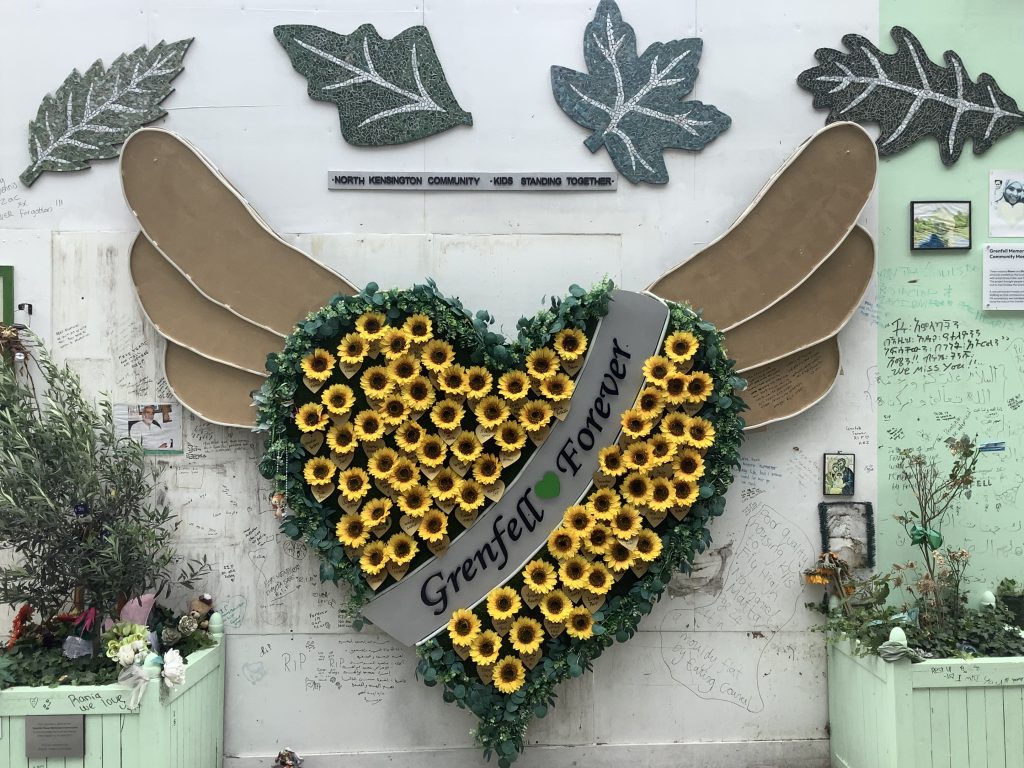
Nine years ago Grenfell Tower burst into flames, taking the lives of 72 people. Every single death was preventable. We know that people who carried responsibility for the safety of the tower knew of the dangers, ignored them, or, worse still, hid them, yet not a single person has been charged or sentenced to prison. Still unsafe, inflammable cladding has not been removed from tall buildings all across the UK. The survivors and bereaved were physically and psychologically harmed, but also morally injured. They were grievously betrayed and deserve justice. A professor of criminology and sociology, Steven Tombs, called the tragedy social murder – the elimination of groups via atrocious events through calculated abandonment.
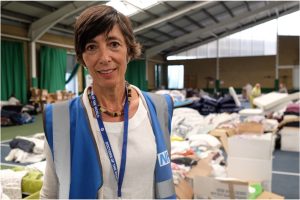
As a clinical volunteer and then GP lead for the NHS outreach team I learnt many things. I give lectures to medical students and healthcare professionals about disaster preparedness, the impact of trauma, individual and community resilience, psychological first aid, culturally sensitive (or insensitive) care, collective grief and the importance of rituals and memorialisation, as well as moral repair and restorative justice for the healing process.
But here I have decided to publish a piece I wrote a few months after the fire, in October 2017 , when the memory was still raw and before I began work for the NHS team. I believe it is still relevant. I am painfully aware of how much suffering this tragedy has caused and how the repercussions still run deep and will do so for a long time to come. As I write, homes are being destroyed in Palestine, Lebanon, Ukraine, Iran, Sudan, the DRC and elsewhere, killing civilians – men, women, children, babies. Lives shattered, hopes destroyed. Many, many Grenfells. I ask myself is this endless, needless death and destruction where humanity wants to go?
Grenfell Tower – An ugly symbol of our time. A general practitioner’s account of the early days after the fire.
Sitting at the back of the lecture hall in the Liverpool Medical Institute, I switched on my iPad, when the news headlines flashed across the screen. This was followed by images of huge, obscene, red and orange tongues of fire licking the facade, billows of toxic smoke, haunted and harrowed faces of survivors, exhausted firemen collapsed on the ground. These were accompanied by a torrent of anguished stories of lost loved ones, of babies thrown from windows, of families forced apart as they struggled to leave the building, of people stumbling down the only staircase, blinded and choked by the acrid smoke. With a shock I realised the tower was only a few hundred yards from my own home, in a neighbourhood I know well from many years living there and working as a GP. No doubt some of the patients I had attended lived in Grenfell tower. I could not concentrate the rest of the day, and felt a mounting pressure to return, to be there, to offer succour and support.
I got back to London that evening and hurried home from the tube station past police cordons and volunteers. Mobiles wedged to their ears, brows furrowed, eyes darting frantically, they were carrying or standing by huge bags filled with clothes and bedding, packets of nappies, boxes of food, baskets of fruit. Normally quiet and discreet, the neighbourhood was humming with activity, throbbing with an urgent, raw altruism. I got home and tried to find out who was coordinating the community response, particularly for healthcare, but in frustration I had to give up. Instead I went to the local church. People were milling around in muted confusion amidst tables laden with food and drink. I identified the coordinator, a somewhat dishevelled middle-aged woman sitting on a chair with a jumbled pile of phones and chargers in front of her. She told me they were ‘overwhelmed’ with volunteers. She asked if I could talk to a lady who had ‘medical problems’, and pointed to a couple slumped on a sofa looking tired and resigned. They had not come from the tower but lived close by and had been forced out of their home. After sorting out the woman’s problems as best I could, I went back home and slept fitfully.
The next morning I found out that a relief hub had formed at the sports centre at Westway and I sped there on my bicycle, stethoscope in handbag, doctor’s badge flapping round my neck, past streams of people, walking in a daze, their expressions haunted, their eyes vacant. Ash flakes, like funereal confetti, slowly spiralled downwards. The acrid smell of burnt plastic clung to the air. I passed by a gap in the buildings and stopped. A small cluster had formed. They were staring silently eastwards, immobile, as if frozen. The media images cannot convey the monstrosity, the immensity of it. It looms huge, dark and forbidding, like a giant skull, with its multiple eye sockets glaring reproachfully at us. It overwhelms us, oppresses us. We cannot speak or barely breathe. This grotesque cadaver of brutal architecture stands upright among its tall, grey, sullen brethren, refusing to lie down, refusing to be ignored. In the silence we can still hear the screams and feel the horror. We can imagine the charred bodies lying abandoned, alone and bereft. Death stalks us.
As I made my way to Westway, I passed under the A40 flyover and in this underpass there were pop-up kitchens, a makeshift bar, and even a band playing – the atmosphere was oddly festive. I managed to persuade the large burly policeman standing at the barrier that I was ‘authentic’, and he let me through. At the entrance, scores of volunteers were sorting piles of donations and tables were laden with food. Charity workers, religious leaders, and reporters hungry for stories were milling around. I sensed a desperate collective need to make things better, somehow, anyhow. A Red Cross volunteer escorted me to the huge sports hall, past piles of shoes of all kinds and sizes, tins and packets of food, orderly rows of toiletries and nappies, cheap suitcases and holdalls, and then to a desk marked ‘health’ where a couple of doctors were sitting somewhat awkwardly, looking apprehensive. Three harried women in blue high-viz jackets marked ‘RBK&C’ were at a desk alongside, trying to sort out accommodation for the survivors. Rows and rows of makeshift beds filled the hall – reminding one of other disaster scenarios in distant lands. But for us, there were no screens or examination couch, no equipment even, and we awkwardly had to make do. “This is like Lesbos!” said Mo, a young doctor. After a couple of hours a cheerful plump-cheeked colleague came from the local urgent care centre bearing shining steel cases with medical equipment and boxes of medicines. We set up a WhatsApp group “The Grenfell Medics” and organised ourselves so that we could work in shifts and share information and advice. I finally felt part of a purposeful team composed mainly of younger colleagues. We waited expectantly for our patients to arrive.
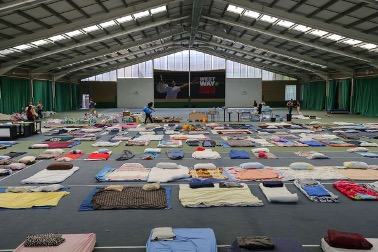
Although there were not many people in the huge sports hall, the suffering was palpable. It hung over us like a heavy, doleful cloud. In one corner a child was playing badminton with his father. In another a large family group sat in a circle trying to console a woman who had lost her husband. The silence was broken by her sporadic wails. I saw the couple from the church the night before. They had spent the night there and were pleased to see me. The woman was going to the local hospital for her booked appointment with a specialist. I talked to Felicia (not her real name), a survivor. She had already seen a counsellor, but I was asked to see her as she had sustained a head injury and temporarily lost consciousness when coming down the stairs of the tower. When the fire broke out her partner had ordered her to flee, but he had gone upstairs to warn his sister and her family. He was not seen again (or the family). She said someone had helped her to get out of the building. She did not know whom. She was desperately hoping her partner was alive. Felicia had worrying symptoms that could mean she had a brain injury – headache, short-term memory loss, dizziness, even fluctuating levels of consciousness. These could all be caused by traumatic stress and lack of sleep, yet I still felt she needed to be checked out. But it transpired she was reluctant to go to casualty because, like some of the others my colleagues had encountered, she was an undocumented migrant. I gathered that she was terrified of being handed over to the Home Office and face deportation. In fact, I later found out, she had been told by her friends not to come to the centre. I reassured her as best I could and managed to persuade her to go, but we share her uneasiness. How many like her are not seeking the help they need? Will they be reported if they do? And how many lying in the tower now are not on an official register, their existence unacknowledged, their deaths doomed to be unmourned?
A young woman, another survivor of the fire, needed help carrying her things to the street where a friend was picking her up. She had made sure she had everything she needed – two full suitcases, a pillow and a bag of provisions. She had the glint of determination in her eyes, the face of the resilient survivor. I went with her and we hugged each other as she left. There was a lot of hugging that day and the ones that followed. Strict codes of conduct regarding ‘boundary maintenance’ were abandoned. We encountered each other as fellow human beings. We rejoiced in their survival. As I left with the setting sun I saw rows of people sitting cross-legged singing and clapping. A long roll of cloth and plates were laid in front of them. Smiling volunteers were carrying large bowls of food, and baskets of bread as they prepared to break the fast and enjoy Iftar. It was poignantly joyful. I went back the following afternoon. As I biked past, the cluster looking at the tower had become a crowd, and many of the faces were sullen, angry. There were now several posters of the missing – their smiling faces reproaching us, moving us to tears.
I returned to Westway the following week and the impression was of greater order and organisation. There were several stalls with large printed signs – “health”, “mental health”, “passports”, “utilities” & so on. The makeshift beds had all but disappeared, and we had screens, an examination couch, computers, printers, and protocols. There were team meetings, evolving strategies and formal rotas. More people were streaming in seeking our medical services. They had difficulty seeing their own GP and needed their medication for chronic conditions such as asthma, diabetes, and hypertension. By now many are desperate for sleep. As neighbours or survivors they had witnessed the horror, helplessly watching the flames engulf the flats within which their friends and relatives were trapped, forced to listen to their piteous calls for help.
“I cannot sleep. When I close my eyes, I hear the screams, I see the flames”, says a young mother. She is tired, her hands shake, she has panic attacks. Her close friend is in hospital in a coma and she worries about her. She is in a hotel far from her home. A woman who escaped civil war in another country complains of blocked painful ears, but this does not prevent her from hearing the screams. This is the terrible irony: some of those in the tower had come to this country for refuge. Forced to leave their war-torn countries and endure unimaginable hardship and loss, they thought they had found a place of safety where they could rebuild their lives. But now they have lost everything all over again. In a few hours, hundreds of refugees have been created as a result of callous and possibly criminal neglect. We call them ‘victims’ – perhaps this makes us feel safer, more detached. But they are much more. They are our fellow citizens. Many are heroes, warriors even. I have been deeply humbled by their courage and quiet dignity, and by the generosity of their fellow residents. They need our compassion, our solidarity, our practical support, and some need our professional services, but they do not need or want our pity. They deserve justice and redress. They have been grievously betrayed. It is time to make amends.
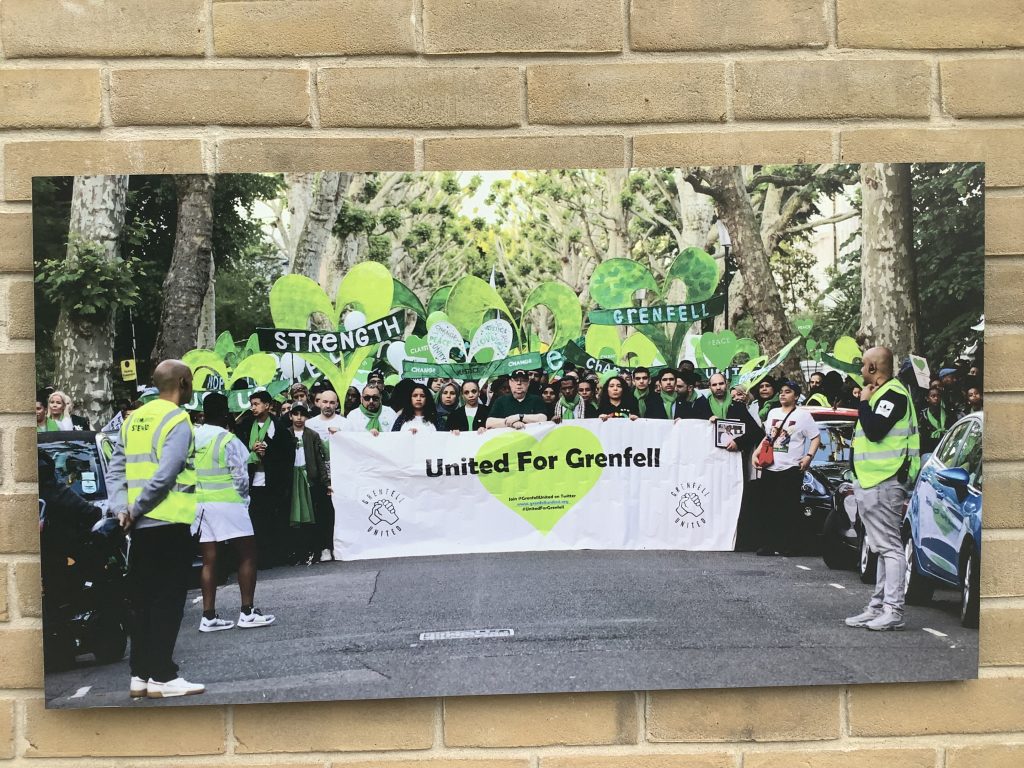
As we excavate the charred residues of this disaster, we discover a litany of ignored warnings; of accounts of council money stashed away or used to ‘bribe’ richer residents; of stories from poorer residents that they were forced out of their homes during refurbishment works and not allowed back into the borough; of ‘social cleansing’; of governmental inertia and indifference. The seedy, sinister secrets emerge daily, like unwelcome vermin. Lifting the shiny facade, the rot is revealed. Gimlet-eyed bureaucrats, using a cold utilitarian calculus, decided that saving costs on materials and fire protection was worth the risk to human lives. And thus we witness the collateral damage of a fragmented, dehumanising system, where the chain of accountability is conveniently lost, where power and profit are ruthless accomplices and the poor and marginalised are treated as chattel. But the tower, in its inescapable concreteness, its sombre presence, does not just represent a giant tombstone for the lives that were lost, but also, perhaps, a symbol for change, of hope even, for those whose voices were unheeded for far too long.
Paquita de Zulueta