Jane Myat, our new valued member of the HVHF core team, writes about the healing art and practice of repair and the reparative work she is involved in now and in the future.
Paquita and I first met through the Northeast London Deep End Group, and have since bonded over cups of tea and wide-ranging conversations about compassion, complexity and what truly matters in healthcare. So when she invited me to speak at the upcoming Replenishing event for the Human Values in Healthcare Forum this September, I felt both honoured and at home.
She suggested the title: Creating a Community of Practice with an Interstitium of Care and Listening Spaces. The phrase immediately resonated. I didn’t think of frameworks or organisational charts. I thought of lace.
Fine and intricate, lace is formed of space as much as substance – a network of fibres stretched and looped over time. It’s the in-between that gives it strength. It reminds me of the linens I used to rummage through as a child in Auntie Billie’s dining room. I didn’t know then what I was seeking – only that I was drawn to treasure-hunting. Folded in those drawers were embroidered napkins, lace doilies, old tablecloths worn soft and stained with use. Traces of lives, of hands, of time gone by. I think I wanted to feel safe and to belong.
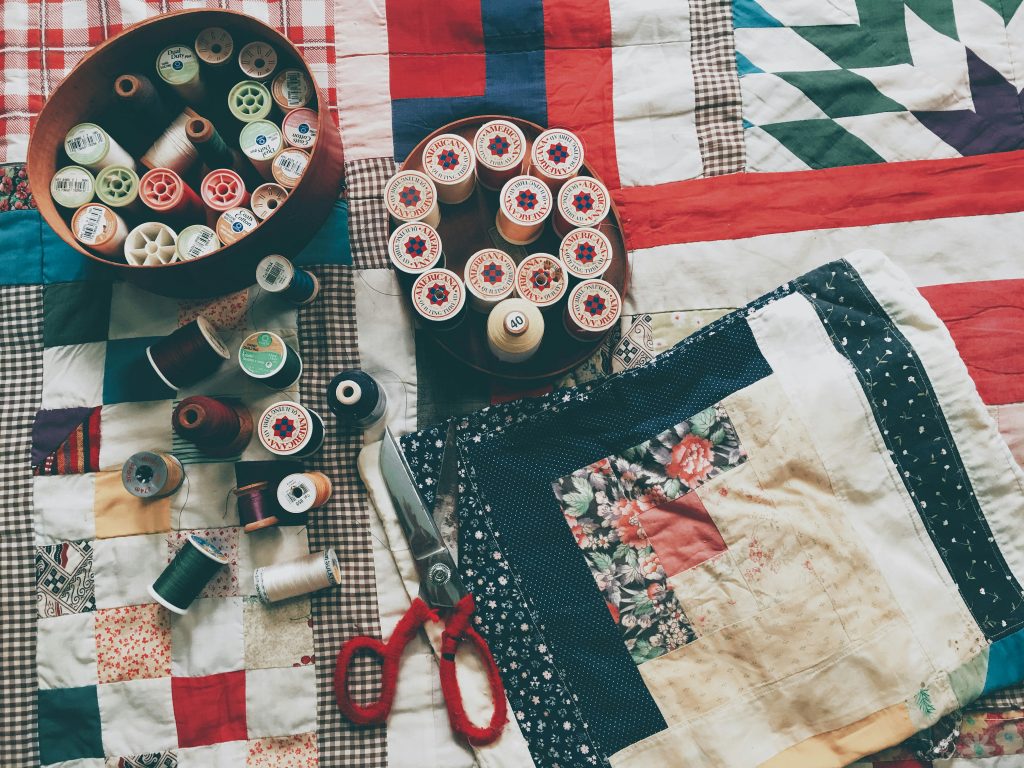
Auntie Billie was part of the Ladies Linen League during the war. She taught me to knit when I was barely three. Sitting beside her on the scratchy blue settee in Birmingham, I learned the beat and rhythm of sharp and rigid needles working with the soft yarn. Push it in, wrap it round, pull it through, slip it off. We’d chant the words like a spell or a prayer. A tiny scarf grew, full of holes, row by row, under my fat little fingers, destined for a teddy or a doll. When I turned nine or ten, Auntie Billie sent me a tiny basket lined with hand-sewn pink lawn. A treasure box. It held a miniature sewing kit, lovingly made and gathered: thimble, pincushion, needle case. Each piece told me I was capable of making things and of mending things.
This memory feels more than nostalgic – it’s a thread still running through me. There’s something about stitching, darning, repairing – practices that take time and attention, that work with the tear rather than hiding it or discarding the whole. We embrace the damage, surround it with small stitches, wrap it in fibre, carefully hold the tension, weave the sharp needle in and out, and create a new pattern. The original wound remains – but once tended to, it becomes part of something beautiful. This is the kind of process that feels essential now – in healthcare, humancare, earthcare.
But to repair, we must still use sharp tools. The needle, the blade, the tongue. They can pierce, cut, tear — or they can shape, bind, create. I think of my teenage years, immersed in making clothes, when my father asked me to sew him a pair of jeans. The raw denim was stiff and unforgiving. The pins hurt my fingers. Needles snapped. It was hard, physical work. And yet when the garment came together and softened with time and wear, it started to hold his shape, his life. Real cloth carrying memory. There is beauty in the hand-worked, lived-in fabric so different from the factory-ripped denim made to look worn before it’s even touched a body.
This is the paradox we live with: our tools can harm or heal. Fire can destroy or cook a shared meal. Knives can stab or carve a spoon. Words can wound or open a difficult but generative conversation. We have a responsibility to learn how to use our tools with care. To know when to soften, and when to be precise. To craft with both tenderness and intention.
Sage Practices along with other projects I’m involved in, The Cards, The River of Hope and Circle of Soup – are all part of a quiet weaving. I am beginning to patch together a life from the fragments and foragings gathered on my journey so far, after stepping off the treadmill of conventional general practice. Weaving it all together will take time. It doesn’t look neat – not yet. There are layers and textures to consider. I’ve been going slowly, deliberately, trying not to drag the familiar warp-speed urgency of the system I left behind into this new, hand-crafted fabric.
If Sage Practices were a part of the human body, I once wondered, what would it be? A podcast episode with Sister Simone Campbell – How to Be Spiritually Bold – stirred this question. When contemplating the Body of Christ, she said, she imagined herself as gastric acid. She laughed: Just enough. In the right place. At the right time. Not too much! It was a moment of humour that stayed with me – and a deeply resonant metaphor. Who are we, and what is our role in the wider body of our communities?
The interstitium – once thought to be empty – is now understood as a vital space: a fine, fluid, lace-like network that holds and supports life. Invisible, yet essential. It reminds me of the space between us in human relationship – the unseen, often unacknowledged tissue of care. That is the image behind the work we’re doing with Sage Practices: surrounding, cushioning, supporting, connecting.
How do we honour what we can’t see?
That subtle charge in a room when something’s gone wrong. The way a word, a joke, a misstep can tear at the delicate membrane of connection. The sudden heaviness of the atmosphere like a humid day before a storm. We know it. We feel it. Even when we don’t speak it.
I write this from a place of sadness. A moment of rupture. A misjudged joke. A tender mood. An old pattern. A row in a cherished relationship – made more painful because we’d been doing so well. I was tired, unarmoured, already thinned out by too much stimulation, too many conversations, too little sleep. We didn’t meet the moment well – our energies out of sync – and now, here we are again, trying to repair the fabric between us.
I glance at today’s newsfeed. The ripple widens. Hurt is being hurled across borders and screens, exploding all around. The world feels full of rupture.
It’s hard to be human. We are such devastating creatures – capable of tenderness and terror, of care and cruelty. In our own homes and across nations, in our inner lives and on the planetary stage, we mirror the same fraying. The fabric that might hold us together wearing thin. We’ve lost many of our anchors, the knots that hold us steady, our patterns. The garment of our shared life feels tangled, threadbare, some fibres gone entirely.
And yet – I still believe in the beauty of repair.
There’s an Icelandic word – nægtni – that speaks of near-carefulness. A way of being where we pay attention and are respectful, especially when we come close to others. How do we learn to be in murmuration, in flock or in shoal? This is what The Cards were made for: to help us notice where we are, and how to meet well at the borders between us. With dignity. With honesty. With grace. I don’t really know how to pronounce nægtni – but to me, it sounds like a powerful, insistent whisper.
As I think of fraying borders and unravelling seams, the story I return to – over and over – is of the old woman in the cave. She weaves a great cape of knowledge and care. And when the black dog of despair comes and pulls it all apart, she sighs. She bends down. She gathers the threads from the floor. And she begins again.
She does not try to make it perfect. The mistakes, the ruptures – they become part of the pattern. Because of them, not in spite of them, the fabric is beautiful.
This is the quiet work we are all invited into: to weave spaces of listening, to create containers with care and practice. To do, undo, and do again. In a world chasing precision medicine and artificial intelligence, we must not forget the handmade, the human. The mess and the muddle. The tenderness of repair.
It’s said that when embroidering, the reverse side should be as beautiful as the front. But we live in a time that privileges the surface – that hides what lies beneath. What if we made things more multi-dimensional? What if we lifted ourselves off our flat screens and into full form – shadow and all?
Jung warned that the shadow, when unacknowledged, becomes darker, denser, more dangerous. And make no mistake – these are dangerous times. We need to turn, like a needle in cloth – down and in, over and through. To look at what lies beneath – not to be lost there, but to find our way back. To reweave our roots, to anchor ourselves in our values, to mend the fabric of our connections one stitch at a time.
We need to learn to live with the tension, not erase it. To honour both the front and back of the tapestry – the visible design and the hidden knots that hold everything together.
And in that process, we make our container. Our drawer of lace. A cloth that can hold us from cradle to grave – delicate, flexible, resilient. Made not only of substance, but of the space between. Woven with care, an interstitium of relationship held in trust.
This work will take many hands and many hearts – through Sage Practices, the Human Values in Healthcare Forum, through our gatherings, our listening, our offerings – small acts of creation in a world at the edge of great unravelling. And yet, we are still weaving. Still tending the threads. Still believing in the possibility of something beautiful, handmade and whole.
And I think again of Auntie Billie’s basket – the gift that has never stopped giving. A woven container, made for a child, holding the means to repair. It’s long gone now, at least in its material form. But I can still feel it in my hands. And I hand it to you.
Even in writing this piece, a thread in my life loosened – a moment of misattunement – clumsy timing, hurt not intended but still felt. And so this too becomes part of the fabric. A reminder that the mending never stops. That we are always learning how to meet each other better – in vulnerability, in listening, in the shared work of repair.
This is our quiet revolution.
Making and mending.
Repairing and Regenerating.
Over and over
Amen
Postscript by Paquita de Zulueta
“Homo Reparans” in our times. Repair as intrinsic to our humanity.
In an illuminating slim book entitled Repair, the impulse to restore in a fragile world, the philosopher Elizabeth Spelman describes human beings as repairing animals. Homo Sapiens is also Homo Reparans. Repair, she observes, is something we engage in everyday and in almost all dimensions of our lives. “To repair is to acknowledge and to respond to the fracturability of the world we live in in a particular way “. We value what we repair. We use our minds, hands and heart in repair work. Repair is a craft. It requires patience, diligence, delicacy, and yes, creativity. “Repair is the creative destruction of brokenness”. We repair inanimate things (and this can be greatly satisfying), but our bodies and souls are also subject to fracture and fissure. For those, we seek healing and consolation from friends and family, or experts such as doctors, therapists and spiritual guides. We also repair relationships and communities, we talk of ‘patching things up’ and of reweaving or mending the social fabric.
Our capacity for repair, unlike creativity or destruction (the other two impulses) – does not excite much attention. It does not fit our capitalist consumer economy and throw-away culture – our thirst for novelty, for shiny new things, for ‘progress’. “Move fast and break things” – the mantra coined by Mark Zuckerberg – glorifies speed, innovation and destruction of the old. In contrast, repair is about trying to maintain some continuity with the past, to halt decay. It is slow, careful work. It is also a reminder that we are imperfect creatures in an imperfect world. It requires us to shed our hubris and arrogance and to be humble and honest about ourselves, to fully recognise both our capacity to harm and destroy, and our shared vulnerability, our finitude.
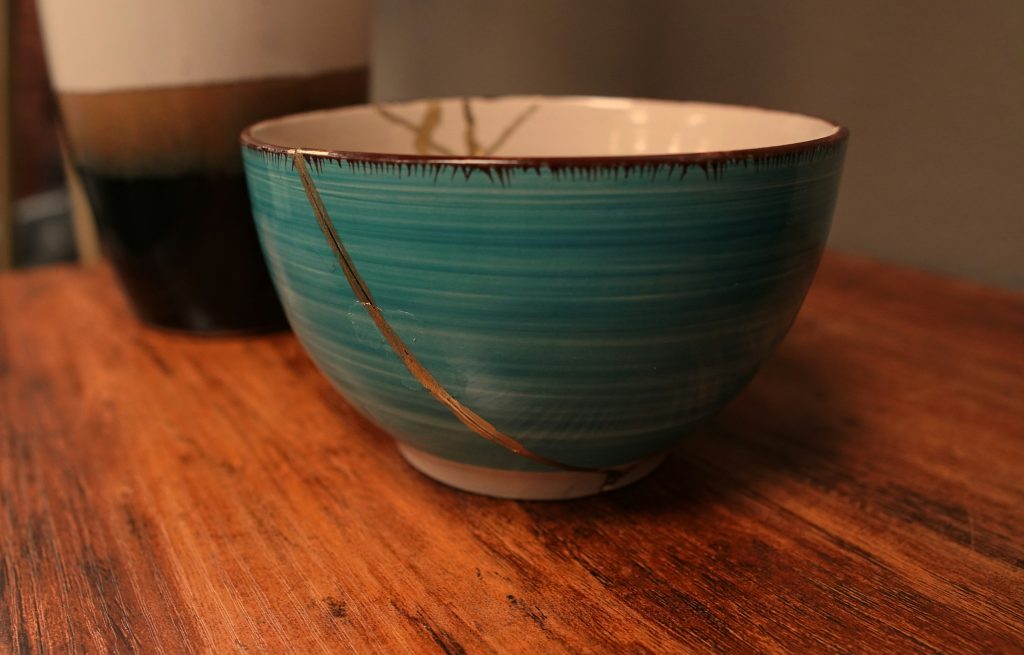
Nature is remarkable in its ability to self-heal and the same can be said of our bodies and minds. The role of the healer is to catalyse and foster the self-healing process, to help bring about repair, and even growth and flourishing. The Japanese art of Kintsugi (golden joinery) embraces the idea that objects, like people, are more beautiful and unique for having been broken and repaired. It forms part of the tradition of wabi-sabi that recognises transience and imperfection and can give us solace and inspiration.
Much of the work of the Forum is connecting and working with others who share our aims and values, to repair the cracks and help create a humane, compassionate and sustainable system of care, by forming a mycelium that nourishes the roots for flourishing and growth.